Ronald Chase: In Pursuit of Beauty
|
Ronald Chase, ‘Fragments’, 10 min, 16mm shown as video, black and white, sound, 1964-69.)
Chase’s debut features key techniques that shape his later work: cross-cutting, asynchronous sound, and dreamy realism. The film follows a woman (Chanan Vafi) who remembers the love affairs with an artist (Ronald Chase) and a student fisherman (Chris Eggert) that led her husband (John Van Gonsic) to suicide.
Ronald Chase, ‘The Covenant’, 10 min, 16mm shown as video, black and white, sound, 1965.
Movement as devotion. Chase collaborated with Elizabeth Harris on the choreography in this dance film. Pauline Oliveros, an experimental composer, electronic music pioneer, and lesbian icon, delivers the live piano score. Shot in black and white, the film features a dancer (Elizabeth Harris) performing a ritual with a plain plank of wood.
Ronald Chase, ‘Clown’, 10 min, 16mm shown as video, color, sound, 1969.
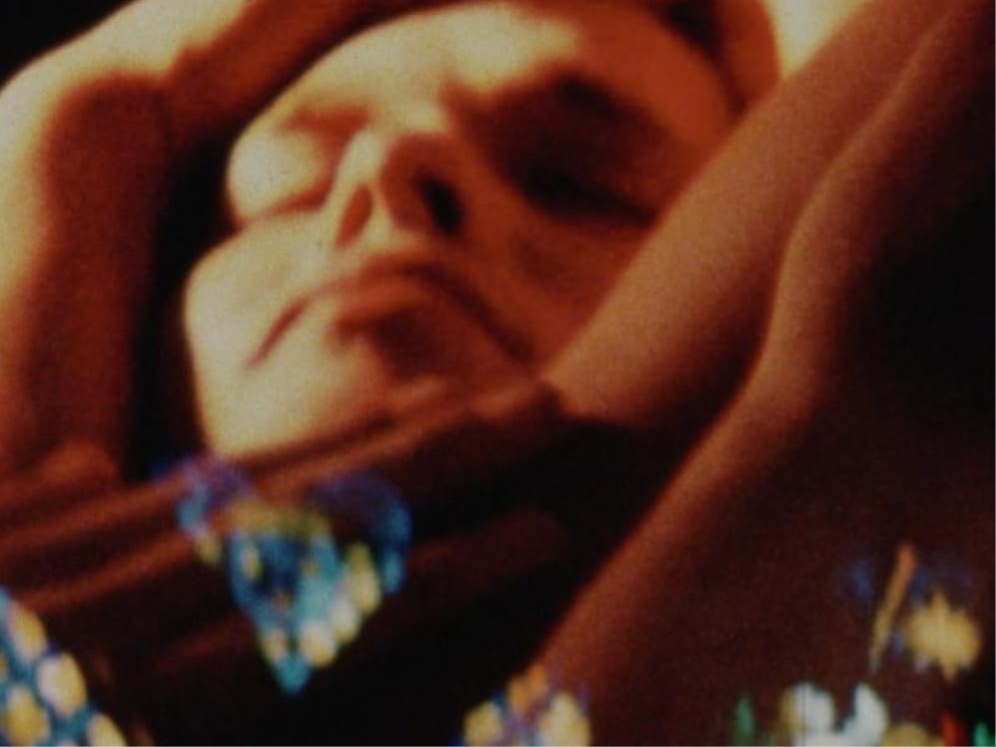
'Clown' screened at the first ever Frameline Gay Film Festival (then dubbed The Gay Film Festival of Super-8 Films). Chase uses fragmented imagery, balancing theatricality with intimacy. A woman (Elizabeth Harris) remembers the moments with her lover (Curtis Martin) and believes she’s made herself ridiculous. She has become a clown.
Ronald Chase, 'Cathedral', 10 min, 16mm shown as video, color, sound, 1971. The queer body becomes architecture, monument, and sanctuary. Thought to be lost for almost fifty years, the film was re-discovered and restored in HD in 2019. Here, Chase imagines queer desire as a sacred act. The closing sequences were shot in Sainte-Chapelle, Paris. |