I've Heard the Mermaids Singing


I've Heard the Mermaids Singing

This month on AQUA Film Club: a whimsical comedy about an aspiring artist who falls for a sophisticated art curator.

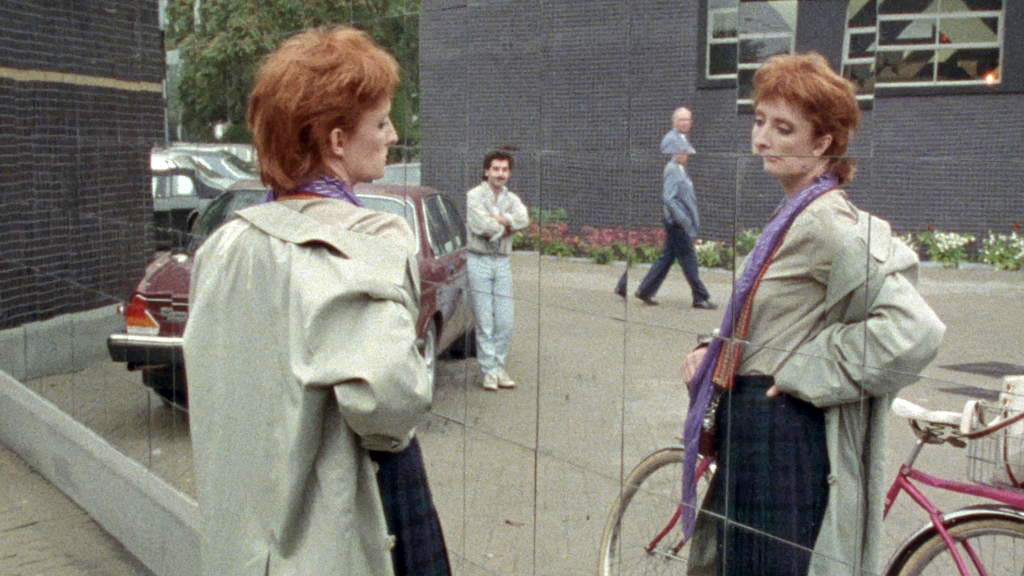
Art-making and queer desire are inseparable in I've Heard the Mermaids Singing (1987). Writer-director Patricia Rozema's debut feature explores how a consistent art practice is a queer act.

We meet Polly (Sheila McCarthy). She’s an earnest, self-taught artist who takes a temp job at a contemporary art gallery. In mockumentary interviews on videotape, Polly breaks the fourth wall. She confesses her desires, sins, and "where it all went wrong." We also witness her deepest, most expressive fantasies, shot in black and white. The film delights in her unique perspective.

Polly is thirty-one years old. She has no ambitions and is perfectly happy being a temp secretary, even though she isn't very good at it. The only thing she cares about is her photography hobby. That is, until she starts working at an art gallery. Polly falls for the curator Gabrielle (Paule Baillargeon). Gabrielle is everything that Polly is not: ambitious, worldly, and arrogant. Polly sees Gabrielle as irresistible and unattainable. Polly even refers to Gabrielle not by her name, but as “The Curator.” The film’s title also reflects this longing and desire. Rozema borrows the phrase from the ending of T.S. Eliot's poem “The Love Song of J. Alfred Prufrock." Like much of his work, the poem explores gender, desire, and sexuality.


I grow old ... I grow old ...
I shall wear the bottoms of my trousers rolled.

Shall I part my hair behind? Do I dare to eat a peach?
I shall wear white flannel trousers, and walk upon the beach.
I have heard the mermaids singing, each to each.

I do not think that they will sing to me.

I have seen them riding seaward on the waves
Combing the white hair of the waves blown back
When the wind blows the water white and black.
We have lingered in the chambers of the sea
By sea-girls wreathed with seaweed red and brown
Till human voices wake us, and we drown.


Beneath Gabrielle’s confident exterior, though, is a deep envy of Polly. Polly has the ability to create art without self-doubt. This tension in their relationship carries the film’s emotional and philosophical weight.

Polly's devotion to her artistic practice feels especially resonant today. How do artists continue making work when institutions stop making room for them? As the film industry consolidates, independent financing and distribution become harder to secure. I've Heard the Mermaids Singing reminds us that making art can be an act of queer resistance. It demands curiosity, patience, and a willingness to embrace the unknown.


--Zegan Doyle


Copyright Credit: T. S. Eliot, "The Love Song of J. Alfred Prufrock" from Collected Poems 1909-1962 by T.S. Eliot. Copyright © 1963 by T. S. Eliot.

Stream I've Heard the Mermaids Singing (1987) for free on Plex and Kanopy.